The Complete Used E-Bike Buyer’s Guide (UK Edition)
Buying a used e-bike can be an absolute bargain, or an expensive headache, depending on what you check and what you don’t. This guide is designed so a total novice can buy with confidence, avoid the common traps, and know exactly what good value looks like in the real world.
Quick checklist for buying a used e-bike
- Choose the right type of e-bike for your riding
- Check battery health and charging history
- Inspect the motor, drivetrain and brakes
- Make sure the frame size fits you properly
- Verify proof of ownership and avoid scam listings
- Compare prices before agreeing a deal
The aim here is simple. By the time you finish reading, you should feel comfortable viewing listings, speaking to sellers, inspecting a bike properly, and making a safe purchase decision.
Buying used makes a lot of sense in the UK right now. New e-bike prices have risen significantly in recent years, while the second-hand market has expanded quickly as early adopters upgrade. That creates opportunities for buyers, as long as you know what to look for.
Start Here: What Type of E-Bike Do You Actually Need?
Before you even look at listings, get clear on the job you need the bike to do. The best used e-bike is the one that suits your routes and your body, not the one with the fanciest motor.
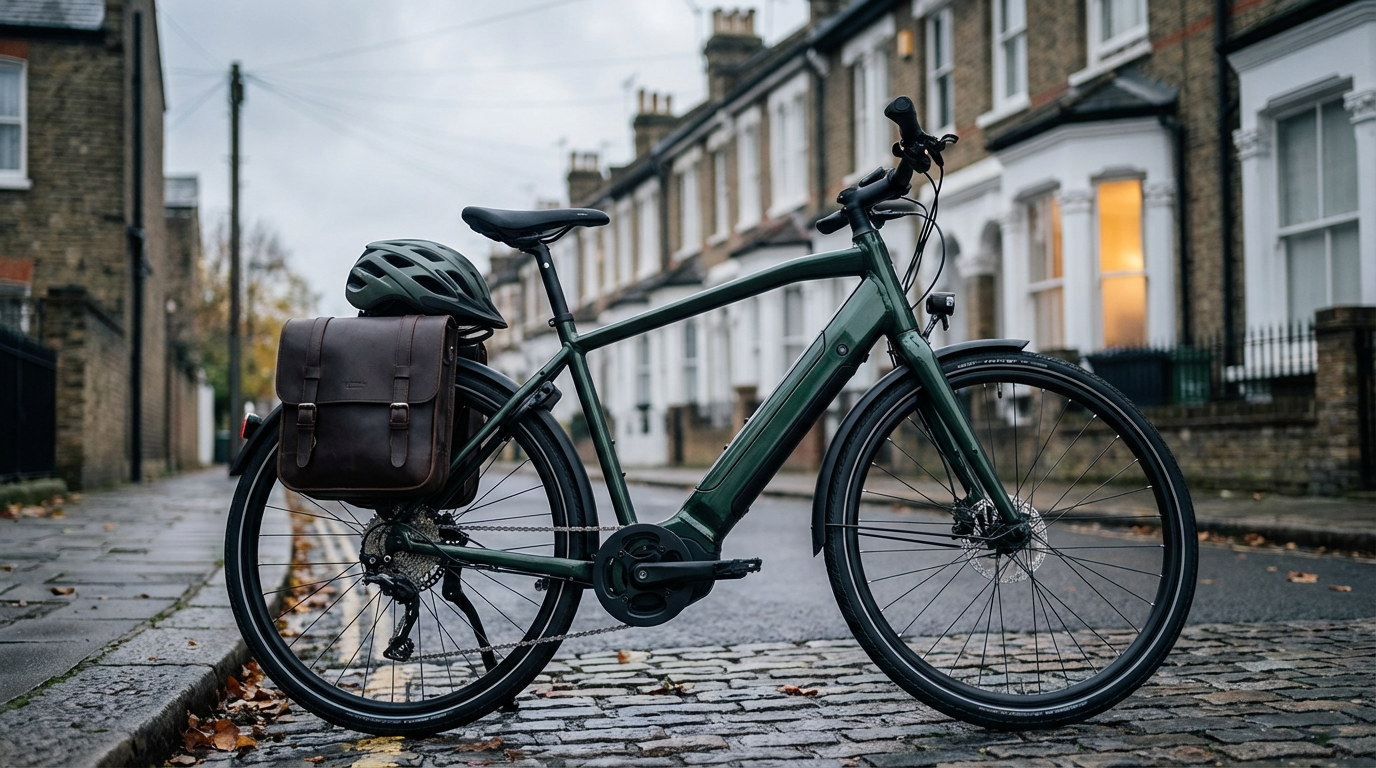
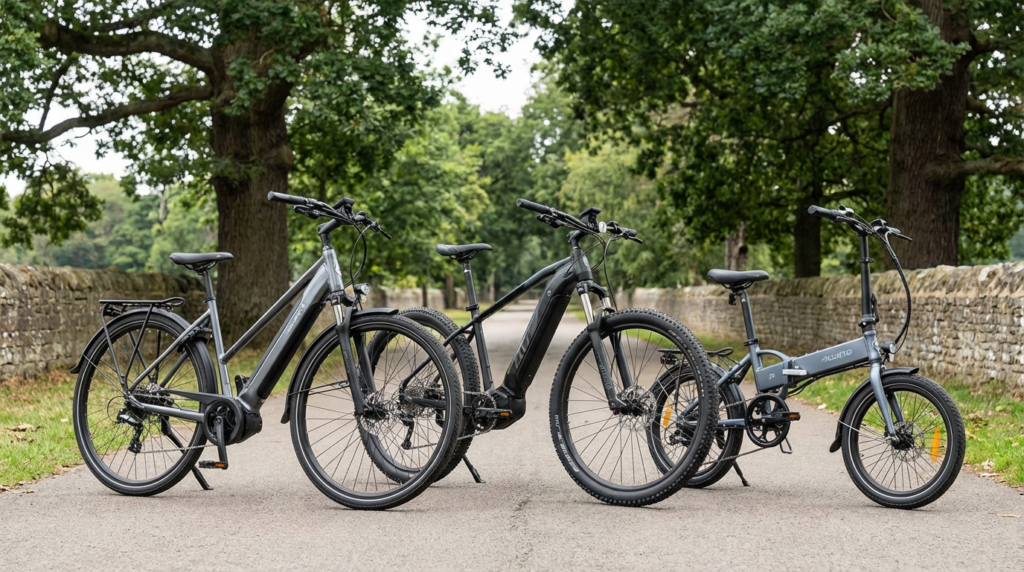
- For commuting and everyday errands, comfort and practicality matter most. Upright riding position, mudguards, rack mounts and decent lighting are more important than raw power.
- For fitness riding, e-road bikes are a great idea. They look similar to normal road bikes but include discreet motors and batteries to assist on climbs or longer distances. These are popular with riders who want to keep up with faster groups or extend their range without arriving exhausted.
- For carrying loads, shopping, tools, or children. Cargo e-bikes are perfect, they’re incredibly useful for families or anyone replacing car journeys, but heavier and more specialised. When buying used, pay close attention to frame condition, brakes, and battery performance, as these bikes often carry significant weight.
- For hills and longer rides, motor placement and gearing become more important. Mid-drive motors generally cope better with steep terrain because they use the bike’s gears efficiently.
- For off-road riding and trails, suspension condition and frame integrity are critical. Expect more wear on components if the bike has been used hard.
- For moderate off-road riding and lighter weight, e-gravel bikes sit somewhere between road and mountain bikes. They are ideal for mixed terrain such as country lanes, gravel paths, canal towpaths and light trails. Comfort, tyre clearance and gearing are more important here than outright speed.
- For folding e-bikes, pay attention to hinge wear and locking mechanisms. These bikes are brilliant for storage and mixed transport, but do need careful inspection around the folding joints.
Set Your Budget Properly (And Don’t Spend It All on the Bike)
Used e-bike pricing varies massively. Two bikes that look similar in photos can be completely different in battery health, motor wear, and maintenance history.
When budgeting, always allow extra for:
- A basic service or safety check
- Replacement consumables such as chain, cassette, brake pads or tyres
- A battery contingency fund
- Transport or collection costs
If a price looks far cheaper than comparable listings, there is usually a reason. Bargains do exist, but unrealistic pricing is often a warning sign rather than an opportunity.
Know the Big Three: Motor, Battery, and Overall Condition
Most buying mistakes happen because people focus on brand and appearance, then ignore the expensive components.
- The battery is usually the most expensive part of an e-bike. A worn battery can cost hundreds to replace, with some of the latest batteries costing over £1000.
- The motor system is generally reliable, but repairs can be specialist and costly, particularly with premium brands.
- The bicycle itself still matters. Brakes, drivetrain, wheels, bearings and suspension all affect safety and long-term ownership costs.
A neglected bike with a good motor is still a neglected bike.
Motor Systems Explained in Plain English
You do not need to be a mechanic, but understanding the basics helps.
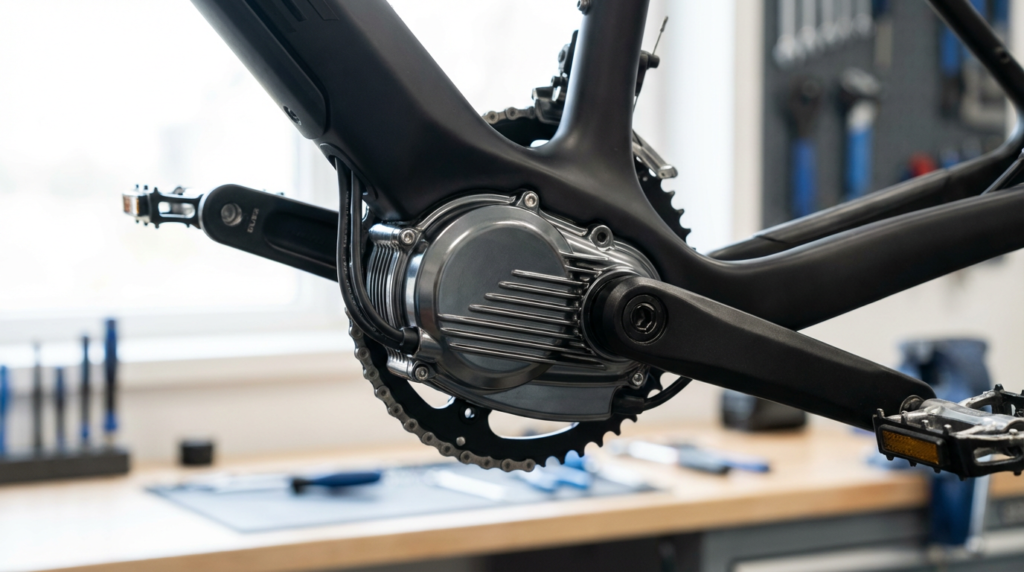
- Mid-drive motors are located in the crank/bottom bracket area. They usually feel more natural, climb hills better, and use the bike’s gears efficiently. They’re common on higher-end bikes.
- Hub motors sit in the wheel, usually the rear. They’re often cheaper and mechanically simpler, and can be very reliable. Some struggle on steep hills, especially on heavier bikes.
- Torque sensors measure how hard you push the pedals and adjust assistance accordingly. This creates a smooth, natural feel.
- Cadence sensors detect pedal rotation and apply assistance based on movement rather than force. This can feel more on or off, but many riders are perfectly happy with it.
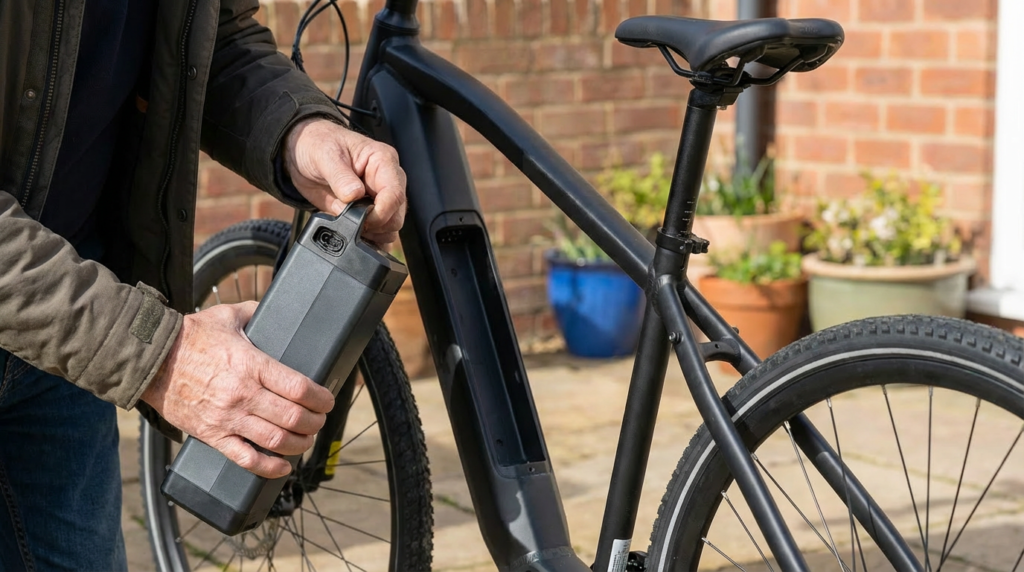
Battery Basics You Need to Understand
Battery capacity is measured in watt-hours (Wh). Higher numbers generally mean more range, but only if the battery is healthy.
- Age and storage conditions matter more than mileage claims. Batteries dislike being stored empty, fully charged for long periods, or exposed to extreme temperatures.
- Real-world battery range depends on rider weight, hills, wind, assist level, tyre choice, temperature and riding style.
What matters most is whether the bike comfortably covers the distance you need with some spare capacity.
Make Sure The E-Bike is Road Legal
Before buying a used e-bike, it’s worth making sure the bike is legal to ride on UK roads. In the UK, most road-legal e-bikes fall into a category called an EAPC (Electrically Assisted Pedal Cycle)
To qualify as an EAPC, the bike must:
- Have a motor rated at no more than 250 watts
- Only provide assistance while you are pedalling
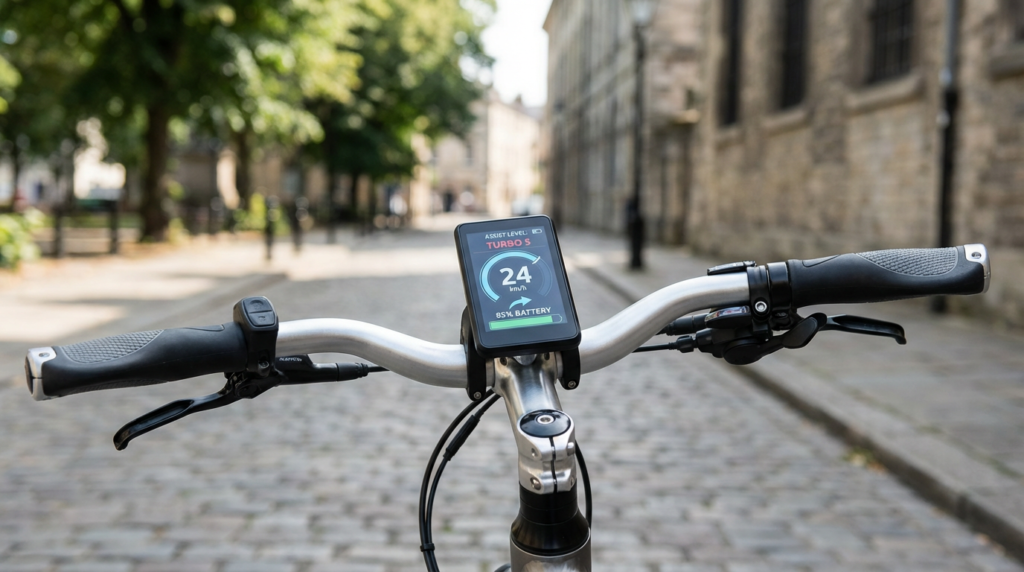
- Stop providing assistance at 15.5 mph (25 km/h)
If a bike exceeds those limits – for example a powerful throttle-only bike or something capable of 30 mph – it may legally be treated as a motor vehicle rather than a bicycle. That means it could require registration, insurance and a driving licence to use on public roads.
It’s also worth noting that many e-bikes sold online can be easily de-restricted through hidden display settings. A bike that was originally sold as UK legal may have had its speed limit removed by a previous owner.
None of this automatically means the bike is illegal to own – some people use high-powered e-bikes on private land – but it’s something buyers should understand before riding on public roads.
For a deeper explanation of the rules, see our full guide: UK e-bike law explained for buyers and sellers.

The Listing Check: Red Flags Before You Even Message the Seller
This step saves time and prevents disappointment.
Clear warning signs include:
- Prices far below market value with vague explanations
- Missing charger or keys
- The seller is unwilling to provide the frame number
- Stock photos instead of real photos
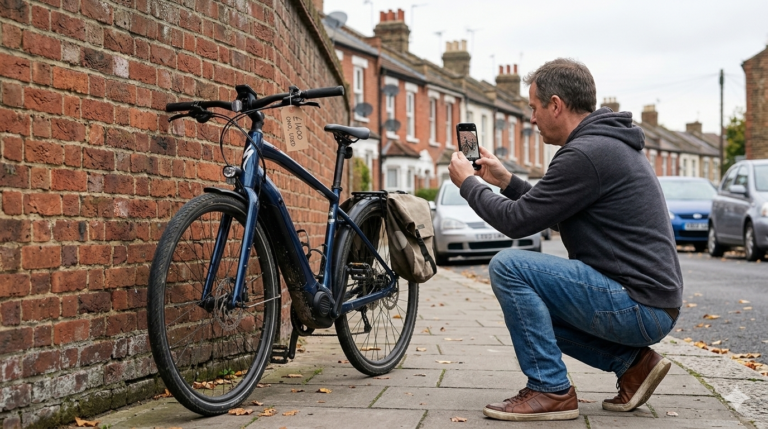
- No close-up images of key areas
Some listings are simply poorly written, but others may indicate problems or scams. If something feels wrong, trust your instincts.
Common E-Bike Scams in the UK
Unfortunately, as e-bikes have become more popular and more valuable, scams have increased as well. Most buyers will never encounter a problem, but knowing the common tactics makes it much easier to stay safe.
- One of the most common scams is the “too good to be true” listing. A high-value e-bike is advertised at a very low price with a quick sale story attached. The seller may claim they are moving abroad, selling for a relative, or need urgent cash. Often, there is pressure to send a deposit quickly to “secure it”.
- Another frequent scam involves fake delivery arrangements. The seller claims they cannot meet in person but will arrange courier delivery after payment. Once the money is sent, the seller disappears, and the bike never existed.
- Stolen e-bikes also appear on the used market. These listings may look legitimate, but the seller cannot provide proof of purchase, avoids sharing the frame number, or gives vague answers about ownership history. Meeting in car parks or service stations instead of a home address can also be a warning sign.
- Clone listings are becoming more common, too. Scammers copy genuine adverts from other platforms, reuse the photos, and repost them at a lower price. Buyers think they are getting a bargain, but the bike belongs to someone else entirely.
- Payment scams can happen when sellers request unusual payment methods such as cryptocurrency, gift cards, or bank transfers to unrelated names. Once money is sent, it is extremely difficult to recover.
- There are also cases where buyers are targeted rather than sellers. Fake buyers may send phishing links disguised as payment confirmations or courier booking forms designed to steal personal or banking information.
The safest approach is simple common sense. Meet in person where possible, inspect the bike thoroughly, verify ownership details, and never feel pressured to rush a decision. A genuine seller will understand caution.
If anything feels wrong, inconsistent, or suspicious, walk away. There will always be another bike. Read our in-depth article on how to spot a scam e-bike listing.
Questions to Ask the Seller
Before viewing the bike, ask a few simple questions.
- How long have they owned it
- Why are they selling
- Whether they have proof of purchase
- Battery age and general performance
- Service history and recent maintenance
- Any faults or known issues
A genuine seller will usually answer openly and clearly.
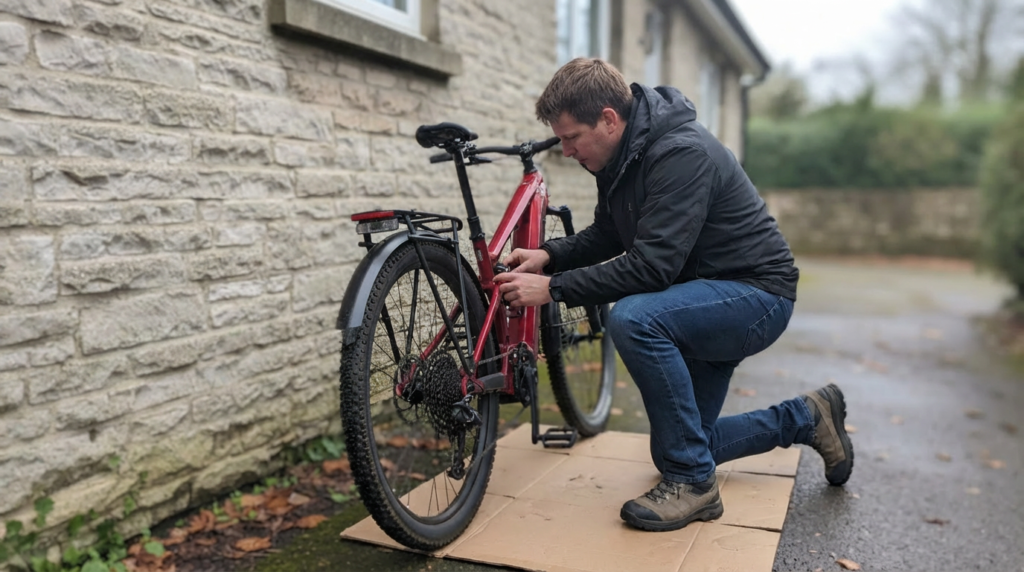
Viewing in Person: The Physical Inspection Checklist
Take your time during inspection. A phone torch is useful for close checks.
- Look for cracks, dents or suspicious paintwork on the frame, especially around welds and joints.
- Spin the wheels and check for wobbles or flat spots. Check tyre condition and spoke tension.
- Test the brakes firmly. Levers should feel solid, not spongy or pulling to the bars.
- Inspect the drivetrain for excessive wear or heavy grime. Worn teeth or chain stretch suggest maintenance neglect.
- If the bike has suspension, check for scratches on fork stanchions and ensure movement feels controlled rather than bouncy.
E-Bike Specific Checks
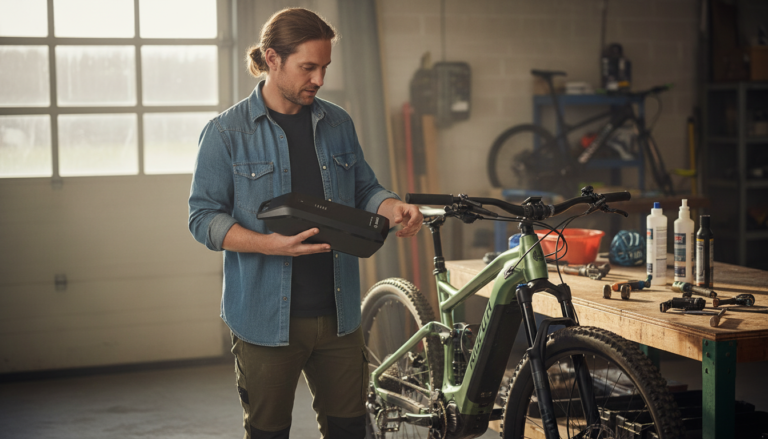
- Check that the battery fits securely and locks properly. There should be no rattling or movement.
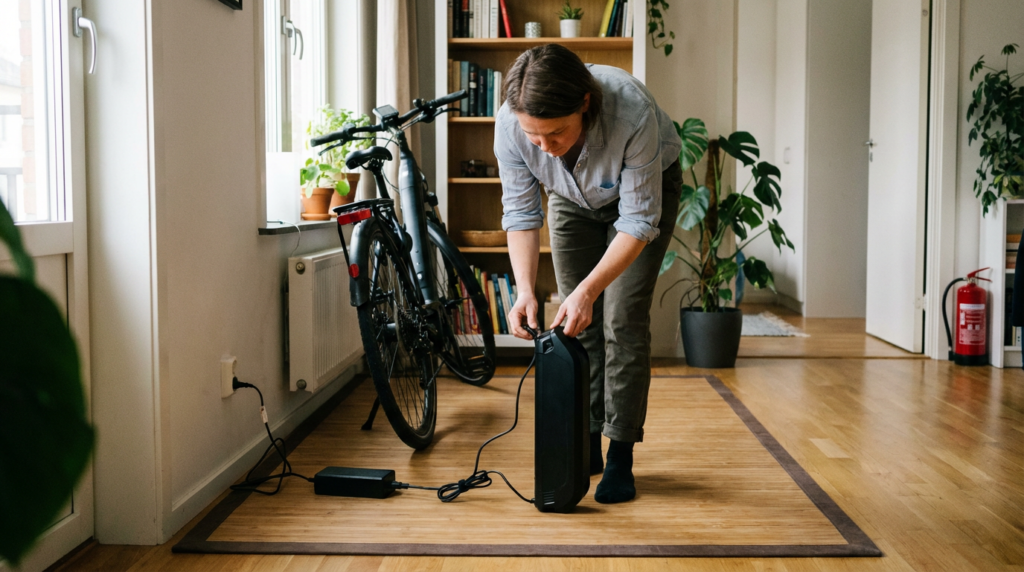
- Ask to see the bike charging if possible. Charging ports should be clean and undamaged.
- Turn the system on and test all controls. Assist levels should change normally, and the display should function correctly.
- Inspect wiring for damage, stretched cables or taped repairs.
- Motor assistance should feel smooth and predictable, without grinding noises or sudden cut-outs.
Motor Inspection (Mid-Drive and Hub Motors)
The motor is one of the most expensive components on an e-bike, so it’s worth spending a couple of minutes checking how it feels and sounds.
For mid-drive motors, listen carefully while riding. Most systems produce a gentle whirr, but they shouldn’t sound harsh, metallic, or excessively loud. Grinding noises, knocking, or mechanical rumbling under load can indicate internal wear.
Pay attention to how the motor feels through the pedals. It should feel smooth and consistent, not rough or jerky.
With the bike stationary, grab both crank arms firmly and try to move them side to side. There should be very little lateral movement. Noticeable play can indicate worn motor bearings or internal wear. This is more common on higher-mileage bikes, bikes that have been ridden hard off-road, or those frequently used in wet conditions or water crossings.
For hub motors, operation is usually quieter overall, often just a soft electrical hum when power is applied. Any grinding, grumbling, or unusual mechanical noises can suggest bearing issues or internal damage.
During the test ride, check that power delivery is smooth and consistent with no pulsing, slipping sensation, or sudden cut-outs under load.
If anything sounds or feels wrong, assume there may be a repair cost involved and factor that into the price, or consider walking away.

The Test Ride: What to Look For
A seller refusing a test ride without a good reason is a concern.
During the ride, check:
- Smooth start-up and engagement
- Consistent assistance across modes
- No slipping gears under load
- Confident braking performance
- Stable handling with no knocking or wobbling
- Pull in the front brake and rock back and forth to check for play in the headset or forks.
Even a short ride can reveal a lot.
Battery Health: Practical Signs for Beginners
You do not need specialist tools to judge battery condition reasonably well.
Positive signs include:
- The seller can describe a realistic battery range
- Battery holds charge consistently
- No sudden power drops under load
- No error codes or cut-outs
- Battery casing is clean and intact
If battery health is uncertain, the price should reflect the risk. Read our guide on how to check e-bike battery health before buying.
Make Sure the Bike Fits You Properly
It sounds obvious, but plenty of buyers overlook one simple thing when buying a used e-bike:
making sure the bike is the right size. A bike that’s too large or too small can feel awkward, uncomfortable and harder to control, especially on heavier electric bikes.
Frame size recommendations are only a starting point. Two riders who are both 6ft tall may still prefer different frame sizes depending on leg length, arm reach and riding style. If you’re unsure, it’s worth checking your measurements before committing to a purchase.
Use our e-bike size calculator to get a quick estimate of the frame size that will suit your height and inseam. You can also read our full sizing guide to understand how different bike types such as hybrid, step-through and mountain e-bikes fit differently.
If you’re buying privately, ask the seller for the frame size and try to test ride the bike if possible. Even a short ride can quickly reveal whether the bike feels comfortable and stable.
Paperwork, Proof, and Theft Checks
Always ask for some form of ownership proof, even if informal.
- Receipts, order confirmations, warranty documents or service records all help establish legitimacy.
- Check that frame numbers exist and are not tampered with.
- Meeting at the seller’s home address is generally safer than meeting in a random public location.
If anything feels suspicious, walk away.
Safe Payment and Collection
In-person collection is usually safest.
Use payment methods that provide evidence of the transaction and request a simple receipt, including the date, amount, bike description, and seller details.
For distance purchases, take extra care with payment methods and delivery arrangements.
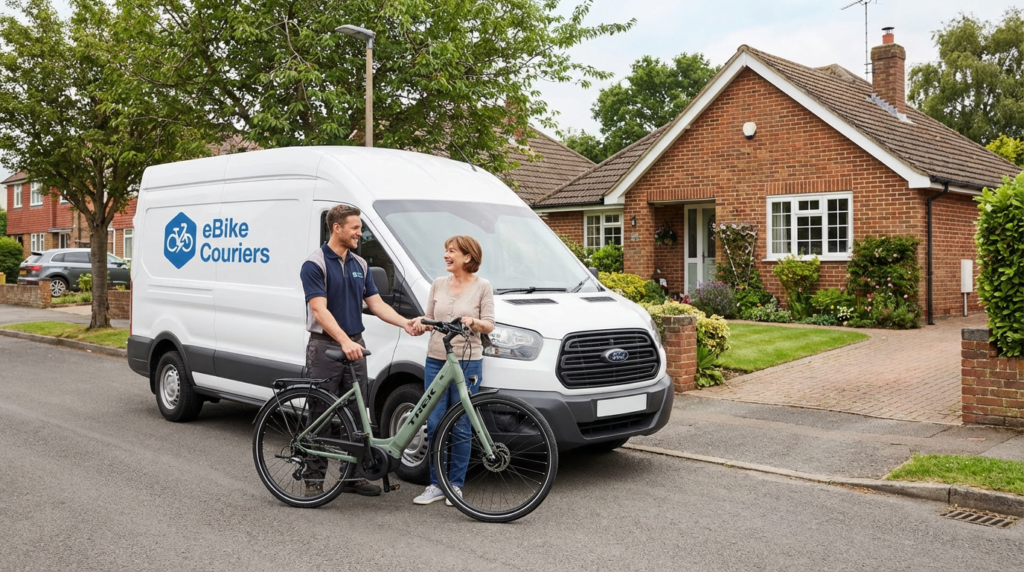
Transporting a Used E-Bike: Understanding No-Box Delivery
Many bikes are damaged during transport rather than in use.
Traditional couriers often require partial disassembly and boxing, which increases risk if done incorrectly.
No-box bike delivery means the bike is transported fully assembled using proper handling and strapping. This is particularly useful for high-value e-bikes or buyers without the tools or confidence to dismantle components.
If boxing is necessary, pedals should be removed, handlebars protected, and vulnerable components padded carefully.
When to Walk Away
Walk away if:
- The seller is evasive or inconsistent
- The frame number situation is unclear
- The bike cuts out under load
- There are signs of crash damage
- The condition does not match the story
There will always be another bike.
What to Do After You Buy
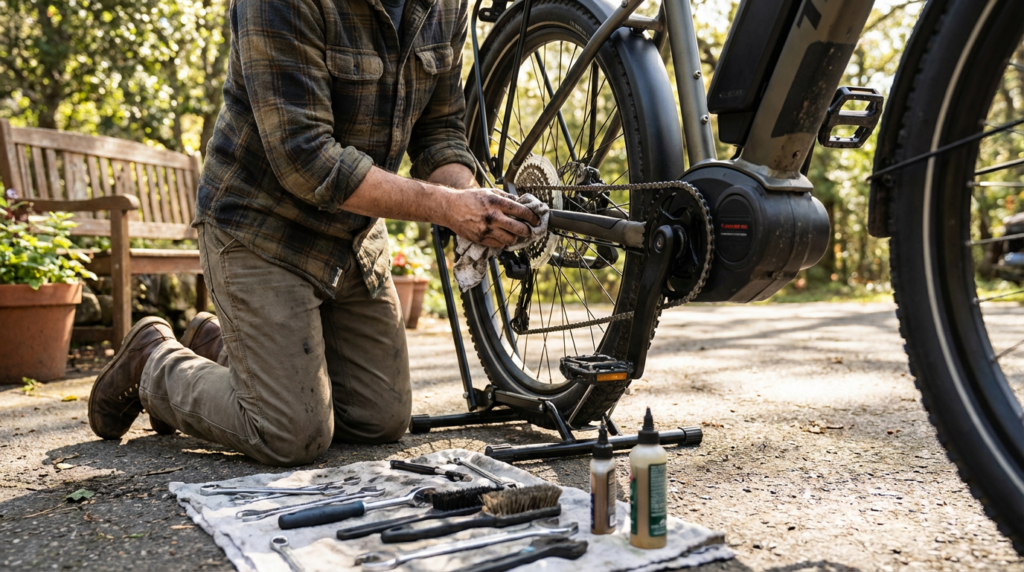
Once you have the bike, perform a basic safety check immediately.
- Check tyre pressures, brakes, bolts and drivetrain condition.
- Fully charge the battery and observe behaviour during the first rides.
- Consider booking a service to establish a maintenance baseline.
- Keep proof of purchase and record the frame number for your own records.
Where to buy used e-bikes in the UK
Used e-bikes can be found in several places across the UK, from large general marketplaces to specialist cycling retailers and dedicated bike platforms. Each option has its pros and cons depending on what you’re looking for.
- eBay – One of the largest online marketplaces in the UK, with thousands of bikes listed at any given time. You can often find a wide range of e-bikes from private sellers and bike shops, although listings can vary widely in quality and detail.
- Facebook Marketplace – Popular for local buying and selling, often with the possibility of viewing bikes in person before buying. Prices can sometimes be lower, but listings may lack detailed specifications or history.
- Gumtree – Another well-known classifieds platform where individuals and small bike shops list used bikes. As with other general marketplaces, the quality of listings can vary and buyers need to check details carefully.
- MyNextBike – A UK-based platform specialising in refurbished bikes and pre-owned models from retailers. Bikes are often checked and serviced before sale, which can provide additional peace of mind.
- EbikeSeller – A free-to-use marketplace dedicated specifically to electric bikes. Listings include used e-bikes from private sellers as well as shop-soiled, ex-demo and customer return models from retailers, making it easier to compare prices and find the right bike in one place.
Whichever route you choose, it’s always worth checking the bike’s condition carefully, verifying proof of ownership and comparing prices before committing to a purchase.
Final Thoughts
There you have it. If you’ve made it this far, you should now have a solid understanding of what to look for when buying a used e-bike, what questions to ask, and how to avoid the most common mistakes.
Buying a second-hand vs new e-bike can save you a lot of money and open the door to bikes that might have been out of reach when new. Follow this guide carefully, take your time, and don’t let excitement rush your decision. A good bike will still be there tomorrow.
Most importantly, trust your instincts. If something feels wrong, inconsistent, or too good to be true, just walk away. There will always be another opportunity, and it’s far better to miss one deal than end up with a costly problem.
If you ever feel unsure or would like a second opinion, please don’t hesitate to get in touch. We’re always happy to help point you in the right direction.
Frequently asked questions
Are used e-bikes worth buying?
Yes, many used e-bikes offer excellent value compared with buying new, especially if the battery and motor are in good condition. Many bikes on the used market come from owners upgrading or from ex-display retailer stock.
How much should I pay for a used e-bike?
Prices vary widely depending on brand, age, motor system and battery health. Our used e-bike price guide explains typical UK price ranges.
What should I check before buying a second-hand electric bike?
Battery health, motor performance, drivetrain wear and proof of ownership are the most important checks. It’s also worth making sure the bike is the correct size for you.